
Personal data reaching another country is a national security threat, says Rizvi at NICTF cybersecurity seminar
At a Nationalist ICT Forum seminar, Ruhul Kabir Rizvi called for cyber laws, technical capacity and skilled manpower to protect citizens' data; the keynote proposed zero trust, a 24-hour SOC and AI rules.
Staff Correspondent
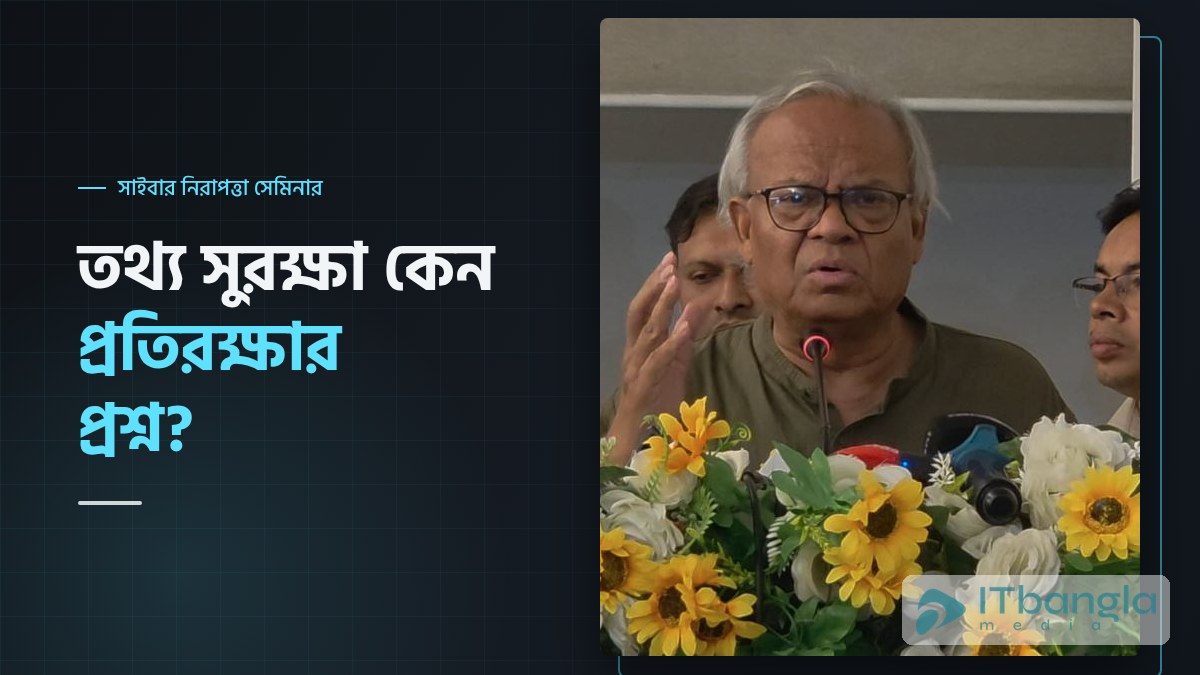
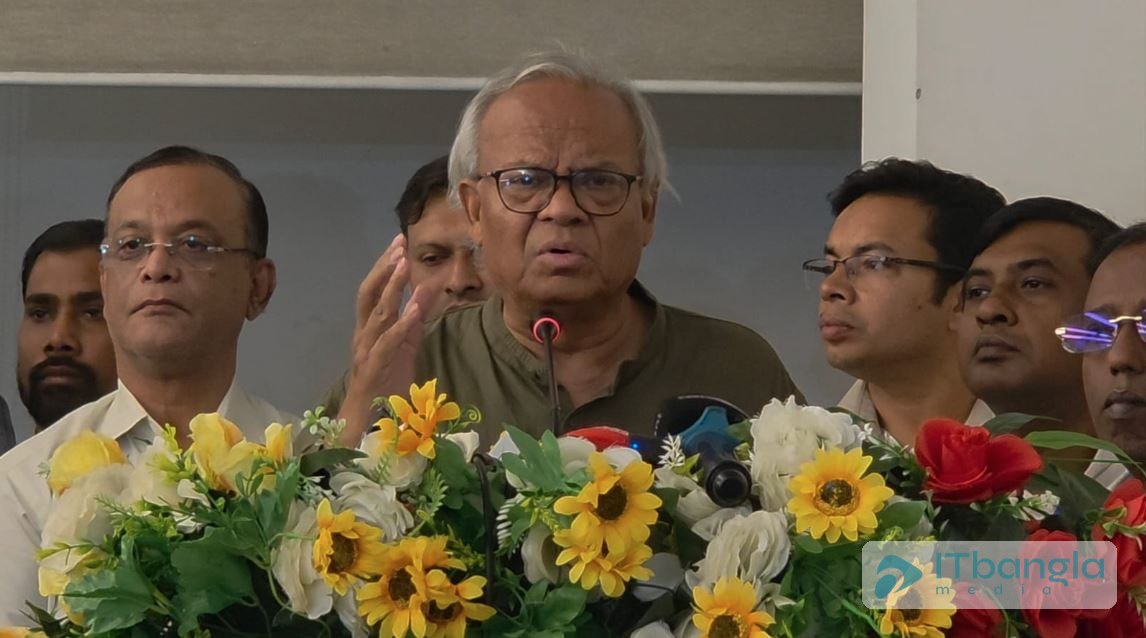
BNP acting secretary general Ruhul Kabir Rizvi has said that citizens’ personal data, including National Identity (NID) information, ending up in another country’s hands is not just a privacy breach but a serious threat to national security. To counter the risk, he called for proper cyber laws, stronger technical capacity and the use of skilled Bangladeshi technologists at home and abroad.
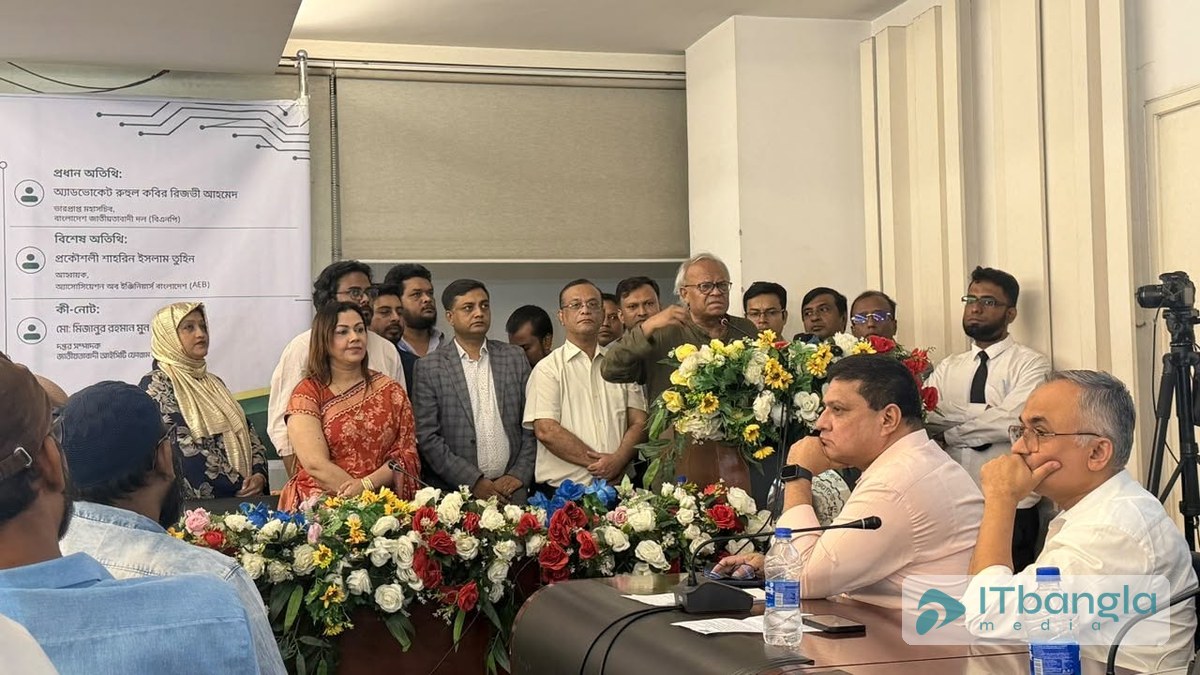
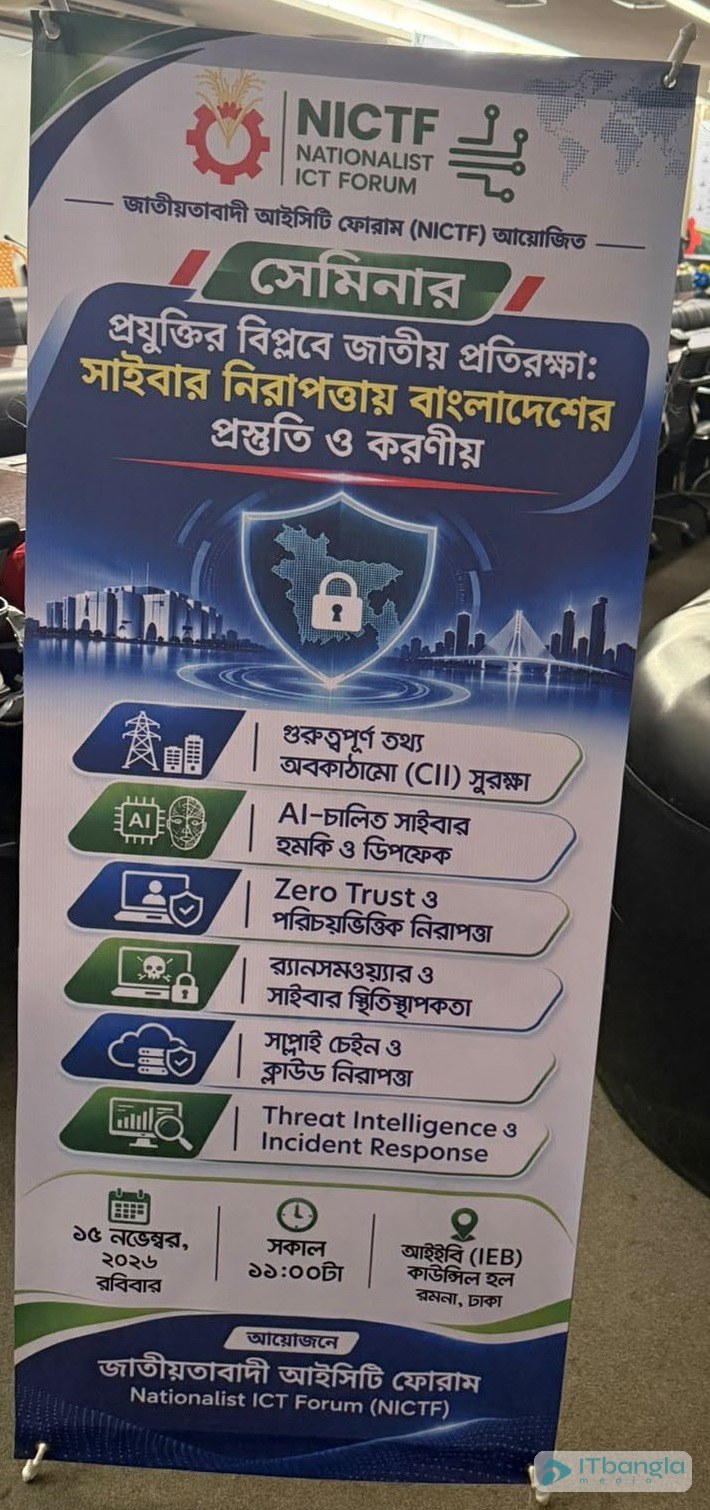
Rizvi was speaking as chief guest on Sunday (15 November) at a seminar titled “National Defence in the Technology Revolution: Bangladesh’s Preparedness and Actions in Cybersecurity”, organised by the Nationalist ICT Forum (NICTF) at the Council Hall of the Institution of Engineers, Bangladesh (IEB) in Ramna, Dhaka. His remarks were reported by the state news agency BSS, Jugantor, UNB (published in The Financial Express), the Daily Observer and the tech news site Digi Bangla.
“Could have been prevented with proper laws”
According to BSS, Rizvi said the hacking of citizens’ personal data, including NID data, and its transfer to a neighbouring country was a matter of concern. He said such incidents could have been prevented with adequate legal safeguards and technical capacity. UNB, the Daily Observer and Manab Zamin reported that he named India directly. None of these reports mention any evidence for the allegation being presented at the seminar.
Rizvi said a breach of personal data is not only a violation of an individual’s privacy but is also tied to the country’s military and national security, and that the risks to the defence system if NID data reaches another country must be taken seriously. According to UNB, he said that if another country hacks and takes away a nation’s vital data, nothing is left of its sovereignty.
Skilled people and ethics
Noting that many people are pursuing higher studies in the field at the country’s universities and that many talented Bangladeshis work abroad, Rizvi said it is the state’s responsibility to use their skills to build the country’s own cybersecurity capacity. According to UNB, he urged engineering universities to produce more skilled cybersecurity professionals.
Voicing concern over the misuse of technology, he said many people consider WhatsApp the safest messaging platform, yet private conversations are still being leaked. No one has the right to intrude into people’s private conversations, he said, calling it a violation of human rights. Citing Mary Shelley’s novel “Frankenstein”, he said technology can become a danger to society and the state when it goes beyond ethics and control, and stressed strict regulation and laws to tackle cyberbullying and cyber warfare.
Rizvi said he had studied cyber law around 2022 while preparing for his LLM examinations, long after completing his LLB, and that the country needs more discussion and appropriate legislation on cybercrime.
Recommendations to go to the Prime Minister
Rizvi advised the organisers not to keep the discussion confined to the seminar, but to compile the speakers’ recommendations into a summary or proceedings and send it to the Prime Minister and policymakers. He said he would help take the recommendations to the appropriate level if they were shared with him.
Keynote calls for zero trust and AI rules
The keynote paper was presented by NICTF office secretary Md Mizanur Rahman Moon. According to BSS, he stressed cybersecurity for critical infrastructure such as power, energy, banking, telecommunications, transport, healthcare and government digital services, along with regular security audits, building skilled experts and coordinated public-private efforts.
According to Digi Bangla, the paper proposed finalising the list of Critical Information Infrastructure (CII), launching a round-the-clock Security Operations Centre (SOC), building a zero trust architecture, clear policies to govern agentic AI and deepfakes, mandatory security standards in technology procurement and an open bug bounty programme. By Moon’s account, 89.3 percent of the country’s servers and 77.3 percent of .bd domains run on PHP, and they are at risk because there is no accountability for regular security audits and patch updates.
“Cybersecurity is now national security. National defence is incomplete without Internet of Things (IoT) security,” Moon said. For organisations, he recommended keeping two online backups and one offline backup, mandatory multi-factor authentication, applying security patches within 48 hours, monthly phishing simulations, cyber drills twice a year and vendor risk checks. He hoped the government would draw on NICTF in selecting members for its planned 20,000-strong skilled cyber force. He named legacy systems, the lack of professional certification requirements in the rules for appointing Chief Information Security Officers (CISO) at critical government infrastructure, and low awareness as major challenges.
Guests and organisers
The seminar was chaired by NICTF president Engineer Rafel Kabir. Special guests were A K M Wahiduzzaman, ambassador and deputy permanent representative at Bangladesh’s Permanent Mission to the United Nations, and Engineer Shahrin Islam Tuhin, convener of the Association of Engineers, Bangladesh (AEB). The published reports did not carry the special guests’ remarks. Engineer Rupam Razzak, a director on the BSS board and vice-president of the forum, also spoke. Forum adviser Maruf Mallick and general secretary Engineer Md Mamun-or-Rashid were present.
According to Digi Bangla, NICTF’s new committee made its debut through the seminar. The forum posted 19 photos of the event on its Facebook page at 2:46pm on Monday (16 November), saying the seminar discussed national security, tackling cyber threats and strengthening Bangladesh’s technological capacity.
Sources
- Nationalist ICT Forum (NICTF) Facebook post, 16 November 2026, 2:46pm: facebook.com/
story.php? story_fbid= 122134563716699172 - BSS (Bangla): “জাতীয় নিরাপত্তা ও সার্বভৌমত্ব রক্ষায় সাইবার নিরাপত্তা জোরদারের আহ্বান রুহুল কবির রিজভীর”, 15 November 2026, 5:27pm: bssnews.net/
bangla/ national/ 360111 - BSS: “Rizvi for stronger cyber security to safeguard national security, sovereignty”, 15 November 2026: bssnews.net/
news/ 446121 - Jugantor: “জাতীয় নিরাপত্তা ও সার্বভৌমত্ব রক্ষায় সাইবার নিরাপত্তা জোরদারের আহ্বান”, 15 November 2026, 6:34pm: jugantor.com/
politics/ 1184697 - The Financial Express (UNB): “Weak cyber defence a threat to national security: Rizvi”, 15 November 2026, 4:53pm: thefinancialexpress.com.bd/
national/ weak-cyber-defence- a-threat-to- national-security- rizvi - Digi Bangla: “দেশের সাইবার সুরক্ষায় জিরো ট্রাস্ট ও এআই নীতিমালার আহ্বান এনআইসিটিএফের”, 15 November 2026, 2:05pm: digibanglatech.news/
195773 - The Daily Observer: “Rizvi rues cyberattacks on citizens’ info, sabotage attempts”, 16 November 2026: observerbd.com/
news/ 606411 - Manab Zamin: “নাগরিকদের ব্যক্তিগত তথ্য হ্যাক হয়ে ভারতে চলে যাচ্ছে: রিজভী”, 15 November 2026: mzamin.com/
article/ 60207
All times are Bangladesh time (UTC+6).