


ICT secretary says citizen data will stay in a federated structure, not on one platform
Speaking at Robi’s Privacy Avengers 2026 event in Agargaon, the ICT secretary said bringing all data into one place would create a centralised risk. A National Data Protection Authority would be formed under three laws enacted this year, he said.
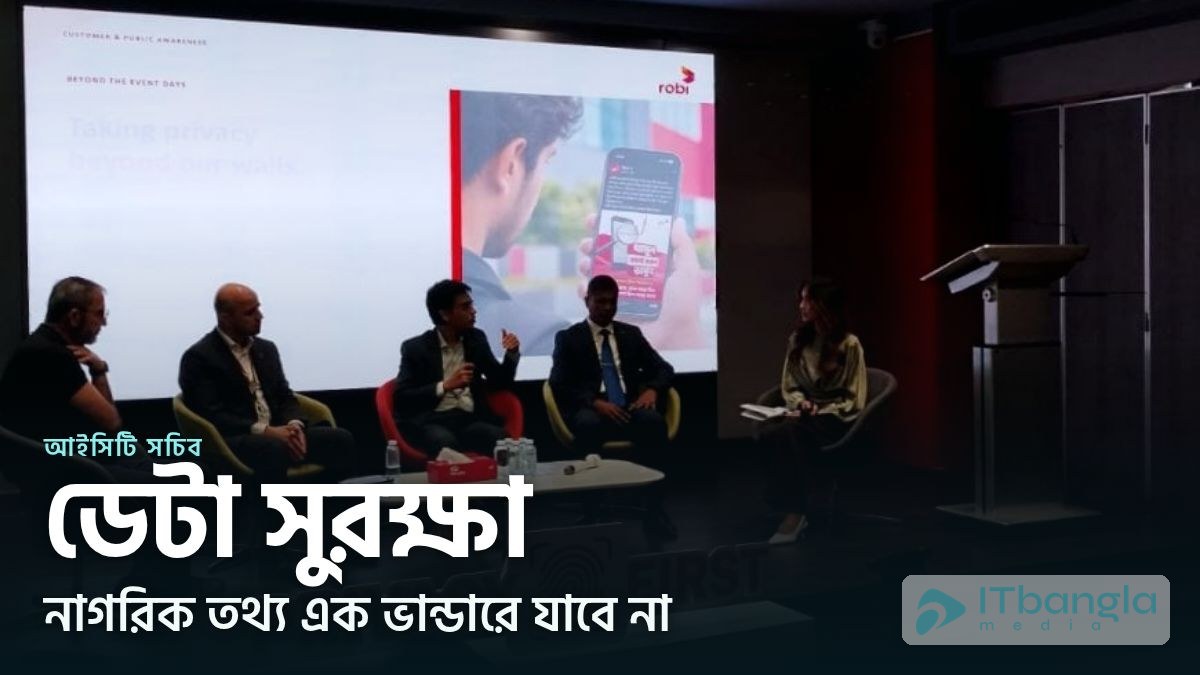
The government is implementing a plan to protect citizens’ personal data through a federated structure and interoperability, rather than concentrating everything on a single platform, Information and Communication Technology (ICT) Division secretary Md Mamunur Rashid Bhuiyan has said. The remarks were reported by DigiBanglaTech at 7:01 p.m. on 5 November 2026.
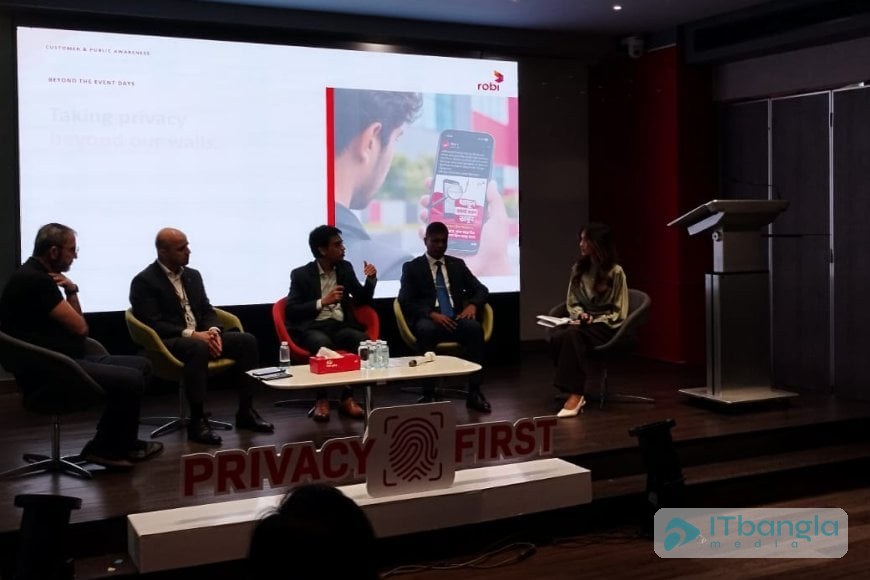
He was speaking as chief guest on Thursday, 5 November, at the closing and awards ceremony of the ‘Privacy Avengers 2026’ competition, held at the head office of Robi Axiata PLC in Agargaon, Dhaka. The top 10 competing teams were recognised, and a policy panel titled ‘Navigating AI, Privacy and Trust in the DLPD Era’ was also held, according to the report.
The special guests, the report said, were Brigadier General Shahzad Pervez Mohiuddin, described by the outlet as commissioner (systems and services) at the Bangladesh Telecommunication Regulatory Commission (BTRC), and Abid Abdul Adam, group chief risk and compliance officer of the Axiata Group. The session was chaired by Ziad Shatara, managing director and chief executive officer of Robi Axiata PLC.

Bhuiyan said personal data was being collected in both the public and private sectors under digital systems, but the real test was how well that data was being protected and whether public trust in the government was being maintained. Having a law in the mould of Europe’s GDPR was not enough, he said; data privacy had to become a national culture.
According to DigiBanglaTech, he said the government had enacted three laws in the first half of 2026: the Personal Data Protection Act, the Cyber Security Amendment Act and the National Data Governance Act. Under those laws, a National Data Protection Authority would be set up under the Prime Minister’s Office, and a Data Governance Board would be formed with the prime minister as chair. Until that permanent authority was in place, he said, the ICT Division was preparing rules and necessary guidance in an interim capacity.
Asked about a single-platform approach, the secretary said government institutions already had their own data stores and that bringing all data into one place would create a ‘single point of failure’ or centralised risk. The structure would be federated, he said; through interoperability, data would remain where it already sat and would be exchanged only when needed, under defined protocols.
He also called for an end to unnecessary data collection, saying that servers sometimes needed only two fields of information but ten were being gathered, a practice that should stop at once. If a data breach occurred, it would not be enough to look only to the law; there had to be a clear standard operating procedure (SOP) for what to do in an emergency, he said. He also said the ICT Division would provide direct funding and financial support to help bring innovative university-level cyber and privacy projects to market.
Brigadier General Shahzad Pervez Mohiuddin said the idea of a single platform for data protection was not practical. A national data management authority would issue overall guidelines, he said, while sector regulators such as BTRC would make rules within their own remits.
The telecom sector was among the state’s critical infrastructure, he said. An operator did not only provide voice or data connectivity; it also processed a wide range of customer information, including SIM registration, call metadata, location, biometrics and financial transactions. With the addition of AI, risks such as data misuse, unauthorised access, algorithmic bias and deepfakes were growing, he said.
Referring to an eight-point set of directions for telecom operators, he said each operator would have to prepare a data inventory and data-lineage framework, documenting where data was stored, why it was held and for how long. He also said privacy impact assessments for AI models, zero-trust architecture, tokenisation and encryption should be made mandatory. Many citizens still did not use smartphones, he noted, so data rights could not rest on mobile-app consent alone and would also have to be assured through a Bangla interface and USSD channels. He also stressed the need to build a National AI Data Centre in the country to protect national data sovereignty.

Abid Abdul Adam said a data breach was not a matter of ‘if’ but of ‘when’. When a cyber-attack or breach hit an organisation, the first hours and days brought severe disruption, he said; shutting systems down damaged quality of service, while paying a ransomware demand also ran against global security practice. He said the Axiata Group had applied Non-negotiable Minimum Baseline Security Standards (NBSS) since 2017–18. He called for regular cyber crisis simulations at board and management level so that, in a real emergency, decisions could be taken quickly under an SOP. He also favoured a balanced consent framework rather than imposing hundreds of complex permissions on customers.
Ziad Shatara said data protection in the digital economy was not routine compliance but the foundation of long-term digital trust. Robi, he said, was investing in a consent-management system through which customers would be able to control, grant or withdraw permission for the use of their personal data. Internally, he said, a strict role-based data access structure was being applied, so that information would not reach any system whose users did not need it for their work. Automatic logs were being kept of every data access, and legal agreements making cloud and third-party vendors accountable had been made mandatory alongside the company’s own staff, he said.
The report said Robi had also run awareness sessions for employees, distributors and call-centre staff under a week-long ‘Privacy First’ programme.
Sources
- DigiBanglaTech, “ডেটা ব্যবস্থাপনায় একক প্ল্যাটফর্ম নয়, ফেডারেটেড কাঠামোতেই নাগরিক তথ্যের সুরক্ষা দেবে সরকার: আইসিটি সচিব”, 5 November 2026, 7:01 p.m. (Asia/Dhaka), https://digibanglatech.news/194842







Comments