


Bangladesh plans to end 2G by 2029: which button phones will keep working
Under the BTRC's proposed roadmap, 2G handsets made after June 2027 will not get marketing approval and subscriber-level 2G service ends in late 2029. VoLTE button phones will keep working; the plan still awaits government approval.
Staff Correspondent
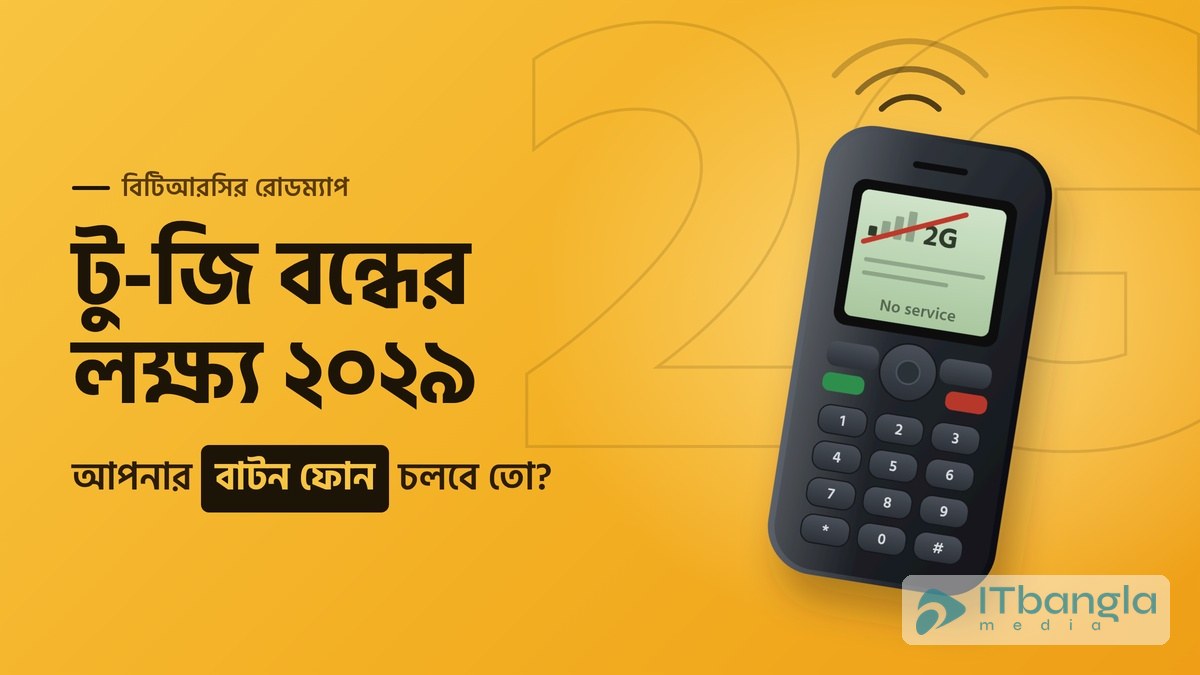
The Bangladesh Telecommunication Regulatory Commission (BTRC) wants to switch off the country’s 2G mobile network by 31 December 2029. If the plan goes ahead, button phones that work only on 2G will no longer be able to make ordinary mobile calls. Button phones with VoLTE, the technology that carries calls over 4G, will keep working. By the BTRC’s estimate, 61.3 million SIM subscribers currently use 2G handsets.
The “2G Sunset” roadmap is not final yet. According to The Business Standard (TBS), the decision was taken at a BTRC commission meeting on 29 September. BTRC Chairman Maj Gen (retd) Md Emdad Ul Bari told TBS on 15 October that the proposal had been sent to the Posts and Telecommunications Ministry for approval, and implementation would begin once the ministry approves it. As of 13 November, no approval had been announced.

The chairman said the 2024 spectrum roadmap had already envisaged ending 2G networks and the marketing of 2G handsets within five years. The Financial Express, citing BSS, reported that a workshop with operators, handset makers and importers on 18 June considered three deadlines, 2029, 2030 and 2032, and chose December 2029. A senior BTRC official, speaking anonymously to TBS, said the deadline could be pushed back to 31 December 2031 if needed.
What stops, and when
| Deadline | Proposed step |
|---|---|
| 31 December 2026 | Last day of ODM approvals for 2G handsets; no new 2G models approved after this |
| 31 March 2027 | Last day of PCBA (circuit board) approvals for 2G phones; local production effectively ends |
| 30 April 2027 | Last day to import 2G-dependent equipment and wireless devices |
| 30 June 2027 | No marketing approval for 2G handsets made after this date |
| 30 June 2028 | Imported 2G IoT and M2M equipment must move to 4G |
| 31 December 2029 | 2G service ends for subscribers |
Source: BTRC working papers as reported by TBS and The Financial Express. Dates may change after government approval.
Which phones will work
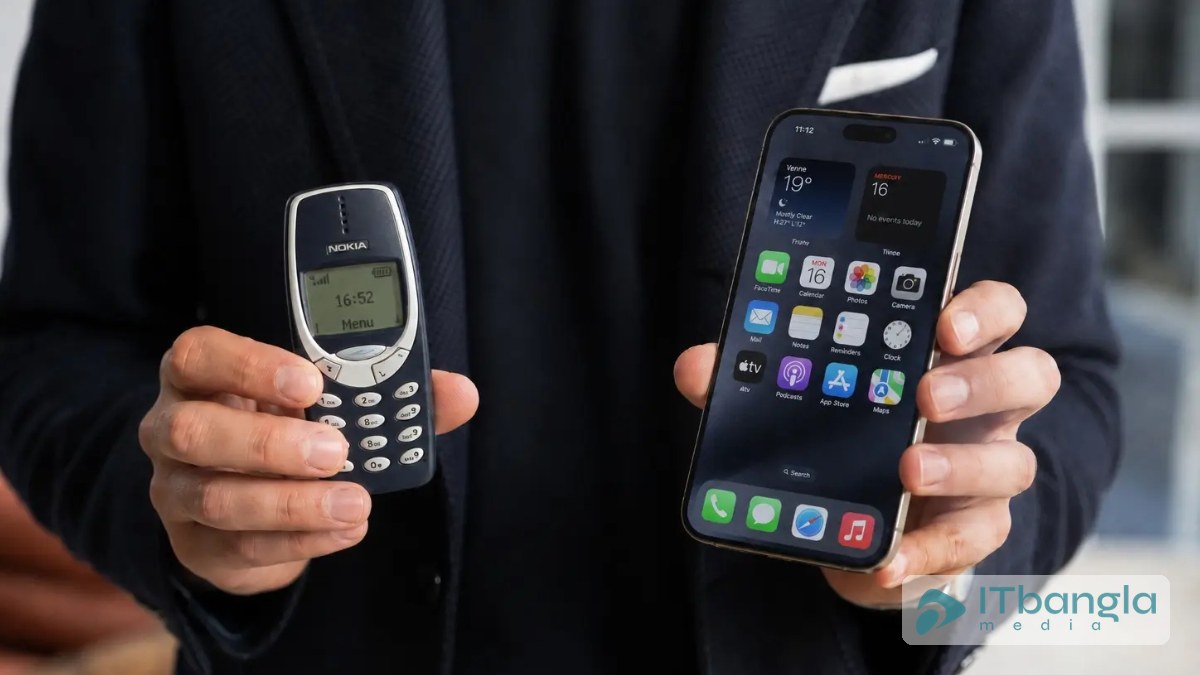
On 2G, calls use the older circuit-switched method. With VoLTE, the same call travels over the 4G or LTE network. So once 2G is switched off, a phone without 4G and VoLTE will no longer be able to call a mobile number. According to the BTRC, most of today’s 2G handsets do not support VoLTE.
Grameenphone’s Chief Corporate Affairs Officer Tanveer Mohammad told bdnews24.com that subscribers are already moving to apps such as WhatsApp, and VoLTE use is growing. Even after 2G ends, calls will go through apps or VoLTE, he said. He added that some 4G button phones designed only for VoLTE calls are already on the market.
Robi Axiata’s Chief Corporate and Regulatory Officer Shahed Alam said 2G-only handsets usually last three to four years. If no new ones are made from next year, there should be no 2G-only phones left in people’s hands by 2030. We found no public statement on the plan from Banglalink or Teletalk.
Price is the big question
BTRC working paper figures released through BSS show that factories in Bangladesh made 32,842,437 handsets in 2025. Of these, 21,244,579, or 64.69 percent, were 2G feature phones. Of the 18,217,253 phones made between January and August this year, 66.23 percent were 2G.
The Financial Express, citing industry estimates, reported that 2G button phones start at about 950 taka, while the cheapest 4G smartphone costs about 9,500 taka. ICT Secretary Mamunur Rashid Bhuiyan has said the government is working to produce smartphones locally for 4,000 to 5,000 taka. Rehan Asif Asad, the Prime Minister’s Adviser on Posts, Telecommunications and Information Technology, told BSS the aim is to bring the effective cost of a smartphone down to 2,000 to 3,000 taka for ordinary people.
The roadmap also proposes support measures: government-branded subsidised smartphones, tax-free VoLTE feature phones, VAT-free instalment plans, and subsidies for low-income users from the Social Obligation Fund (SOF). Chairman Emdad Ul Bari told TBS the BTRC is discussing tax cuts with the National Board of Revenue and low-interest instalment purchases with Bangladesh Bank.
Handset makers have objected to the timeline. Jakaria Shahid, president of the Mobile Phone Industry Owners Association of Bangladesh (MIOAB), told The Financial Express that if production stops after March 2027, the market could be flooded with illegally imported phones over the following two years. He told TBS that moving more than 60 million subscribers to a new system in such a short time will not be easy.
What users should do now
- There is no need to replace your phone yet. Under the proposal, 2G stays on until the end of 2029, and the roadmap is still awaiting government approval.
- If you buy a new button phone, look for 4G and VoLTE. A phone whose box or specifications say only 2G or GSM will not be able to make calls after 2029 under the roadmap.
- Check that your SIM is 4G. VoLTE calls usually need a 4G SIM and VoLTE service from your operator. If your SIM is old, ask your operator’s customer care.
- Think twice before buying a 2G phone after 2027. It will be useful only until the end of 2029 at most.
Read our earlier analysis of the 2G shutdown plan, published on 6 November (in Bangla): ৬ কোটি ১৩ লাখ নতুন ডিজিটাল সম্ভাবনা: কায়সারের পর্যবেক্ষণ.
Sources
- The Financial Express (citing BSS), “BTRC prepares ‘2G Sunset Plan’ by 2029”, 17 October 2026, 7:04pm (Asia/Dhaka): thefinancial
express. com.bd/ trade/ btrc- prepares- 2g-sunset- plan- by-2029 - The Business Standard, “BTRC plans to phase out 2G networks by Dec 2029”, 20 October 2026, 2:35pm (Asia/Dhaka): tbsnews.
net/ bangladesh/ btrc-plans- phase-out- 2g-networks- december- 2029- 1578271 - The Financial Express, “Plan to phase out 2G mobile service raises concerns”, 20 October 2026, 11:57am (Asia/Dhaka): thefinancial
express. com.bd/ trade/ plan-to- phase-out- 2g-mobile- service- raises- concerns - bdnews24.com, “2G services to end by 2029. Will millions of button phones stop working?”, 6 November 2026, 9:55am (Asia/Dhaka): bdnews24.
com/ business/ hs5cvldp2i - The Daily Ittefaq, “বন্ধ হচ্ছে টু-জি, অকার্যকর হয়ে পরতে পারে বাটন ফোন”, 6 November 2026, 3:52pm (Asia/Dhaka): ittefaq.
com.bd/ 819382/
Feature image: ITbangla graphics (illustrative).



Comments